Suffering a minor malaise brought on the strategic/operational planning process currently underway at my place of work. As a process it always seems an exercise in futility and frustration, but at least the current process is significantly better than some I've observed....more...
After spending a few days visiting friends and family in Central Queensland - not to mention enjoying the beach - a long 7+ hour drive home provided an opportunity for some thinking. I've long had significant qualms about the notion of leadership, especially as it is increasingly being understood and defined by the current corporatisation of universities and schools. The rhetoric is increasingly strong amongst schools with the current fashion for assuming that Principals can be the saviour of schools that have broken free from the evils of bureaucracy. I even work within an institution where a leadership research group is quite active amongst the education faculty....more...
The following is the first attempt to expand upon an idea that's been bubbling along for the last few weeks. It arises from a combination of recent experiences, including...more...
The following is a collection of presentation resources (i.e. the slides) for an ASCILITE'2012 of this paper. The paper and presentation are a summary of the outcomes my PhD work. The thesis goes into much more detail....more...
And here's the followup to the well received "LMS Product" post. This is the second section looking at the limitations of how industrial e-learning is implemented, this time focusing on the process used. Not really happy with this one, space limitations are making it difficult to do a good job of description....more...
I've just finished the Douglas Rushkoff book Program or be Programmed: Ten commands for a digital age. As the title suggests the author provides ten "commands" for living well with digital technologies. This post arises from the titular and last command examined in the book, Program or be programmed....more...
I'm in the midst of the horrible task of trying to abstract what I think I know about implementing e-learning information systems within universities into the formal "language" required of an information systems design theory and a PhD thesis. This post is a welcome break from that, but is still connected in that it builds on what is perhaps fundamentally different between what most universities are currently doing, and what I think is a more effective approach. In particular, it highlights some more recent developments which are arguably a step towards what I'm thinking....more...
During the last week I have been in Canberra for various events, including giving a presentation on BIM at University of Canberra. Somewhat surprisingly (as last I knew, he was in New Zealand), Leigh Blackall was in "audience" at the presentation, and as is Leigh's wont, he asked some serious questions. I was troubled by those questions and needed time to reflect on what an answer might be....more...
I should be writing other things, but there's a wave amongst some of the "innovation bloggers" at the moment that I wanted to ride for the purposes of - once again - trying to get those driving university e-learning (and learning and teaching more generally) to realise they have something fundamentally wrong. They are using the wrong type of process....more...
The following is a first draft of a section from my thesis. It will form part of the newly cut down section on Process within chapter 2 (170 pages down to 50). The following tries to say something about the design processes used for teaching within universities. It starts with a characterisation of instructional design, looks at the limitations (referring to some earlier work about teleological and ateleological processes) and seeks to describe what the literature has to say about how teaching academics actually design/plan their courses....more...
This is in part a test of Wordpress.com's new support for Vimeo video. The video below is of a presentation I gave at CQU this year. The abstract is below. The slides are on slideshare....more...
I've heard a number of folk at ASCILITE'09 claim that there needs to be a change in culture amongst academics around learning and teaching. To me this has always sounded a bit like a deficit model of teaching staff. It's a model that I've heard again and again at ASCILITE'09 and in other literature around learning and teaching in higher education. You know the sort of thing e.g....more...
Last week I attended a presentation by a colleague at CQUniveristy titled The Bureaucratic Model of Adult Instructional Design. The stated purpose of the presentation was...more...
Dave Cormier has recently published a blog post titled Dave's wildly unscientific survey of technology use in Higher Education. There's a bunch of interesting stuff there. I especially like Dave's note on e-portfolios...more...
The following is a reflection on and response to a paper by Lisa Lane (2009) in First Monday titled "Insidious pedagogy: How course management systems impact teaching". I've been struggling with keeping up with reading, but this topics is closely connected to my thesis and the presentation I'll be giving soon....more...
Two thesis related posts in a day, I must be on a roll. This post actually marks a milestone, the following rough bit of material is the last bit of original writing I'll need to do for chapter 2. What remains will be tidying up, fixing typos/spelling/grammar, "concludings" and some major cutting. Sadly chapter 2 currently stands at 200+ pages and will need some major cutting I think to be a reasonable size. That's a job for another day....more...
It's almost a month since the last post from the first draft of my thesis. So, after much time away here's the next installment. It's probably rougher than previous versions - which says something - I'm still getting back into the swing of things....more...
Earlier this year I posted on Disruption and the “mythic” technologies of education and my views about consistency and diversity when applied to learning, especially e-learning within universities....more...
Another early update today - off to the Crocodile Farm as an excursion with the boys so today's a write off. However, progress has been good and the end is nigh for chapter 2 - at least in first draft....more...
The following is the first part of the Pedagogy component of the Ps Framework with forms part of Chapter 2 of my thesis. As with previous thesis posts this is a rough first draft of the content, feedback welcome. This is the first of three parts to this component. The next will say something about "learning theory" and the final will draw some lessons....more...
This post contains the last section of the "Product" component of chapter 2 of the my thesis, at least a rough first draft version of it. This is getting to the crux of my argument and problem with how most universities implement e-learning (adoption of an LMS) and it refers back to many of the other components of the Ps Framework. This will eventually become part of my EDUCAUSE'09 presentation and I'm thinking of re-working the following from thesis speak into something a little more leading....more...

The following completes the "alternate models" section of the Product component started in a previous post. It's a bit rough and ready, but hopefully good enough....more...
And here's the next bit of the Products component for chapter 2 of my thesis. The aim of this section is basically two argue that the LMS approach to e-learning embodies one view of how to procure software and one software model. I eventually aim to argue that both of these predominant models are essentially bad matches for the nature of e-learning within a university. The following is intended more to identify that there are alternatives than argue for the inappropriateness. That's for later. But I doubt I've stopped it coming through....more...
Back to the PhD today, probably will do a couple of summaries of papers I'm reading. The focus is on the product models and procurement strategies used by Universities to solve the technical problem of e-learning. I start with a paper with the title "Learning Tools in Higher Education: Products, Characteristics, Procurement" (Wild and Sobernig, 2007)...more...
Over recent weeks I have ignored Twitter, it was consuming too much time and I have to focus on writing the PhD. There is a cost involved to doing this, you miss out on some good insights....more...
The following is the next short, and still somewhat questionable, section of the Product component. A previous post discussesd the limitations of an LMS, this section talks briefly about the other types of systems necessary for learning and teaching. The next section will talk about more abstract alternatives to those most commonly associated with the LMS....more...
This post follows on from previous posts and contributes the next bit of the Product component of my thesis....more...
The following post is the next step in completing the Product component of chapter 2 of my thesis. An earlier post started off the Product component. This post is the first section in a broader section titled "University e-learning technology". This post focuses on the learning management system (LMS)....more...
A bit of progress made on chapter 2 this week, sufficient to suggest that the end is nigh - at least for the first draft. That progress is in spite of only having limited time this week to work on the thesis because of work on Monday and having to baby sit the two boys on Wednesday....more...
This post contains the start of the Product component of the Ps Framework that forms a section out of chapter 2 of my thesis....more...
This is the last section from the People component of chapter 2 of my thesis. It is an attempt to derive some lessons from the previous sections that are relevant to the practice of e-learning....more...
The following is the second to last section for the People component of chapter 2 of my thesis. The basic aim of this section is to establish that people are generally not rational and methods that assume that they are, are destined to fail. It's my proposition that most of the organisational approaches to e-learning and, more generally, learning and teaching at universities suffer this flaw....more...
I've fallen a bit short of what I wanted to achieve this week, however, overall I'm feeling pretty good about progress. In particular, because some of the initial evaluation results point to the "Webfuse way" having some quantitative benefits. Also, if the work in the last week get's the okay from the esteemed supervisor it should make completing chapter 5 pretty straight forward....more...
At the start of an early day of working on the PhD I am feeling particularly old. Dealing with a teenager at home may also have contributed to it. So, I'm feeling in a particularly curmudgeonly frame of mind, i.e. grumpy old b*stard. Please keep that in mind when reading the following, it will likely come over much more cynical/negative than it is meant....more...
The following is the next completed (to a rough first draft stage) section of chapter 4 of my thesis. It follows on from a post from yesterday that started defining the problem being faced. This section completes the definition of this problem by giving a broad summary of the use of "e-learning" at CQU up until 1996....more...
In the last PhD update I outlined a change to tack. I've moved from working on chapter 2 (the lit review) to working on chapter 4. Chapter 4 is the first of two chapters, each describing one iteration of the 2 action research cycles that make up the core contribution of the thesis. Chapter 4 focuses on the period from 1996 through to 1999 and is titled "Build it and they will come"....more...
I continue to have a high level of skepticism around the concept of universities investing in ePortfolios. I feel that it is another example of how people within universities tend to over-emphasize their importance in the scheme of things, extend the university role into areas it where it should never have been and subsequently waste resources and more importantly the time and energy of academic staff that would be better spent focusing on other aspects of improving learning and teaching. In particular, I see ePortfolios being another approach that is being over-run by the technologists alliance....more...
Increasingly, the IT requirements of organisations are being met through the application of "enterprise systems". Large systems created by commercial vendors (though increasingly there are also open source variants, which while offering small improvements still suffer some of the same problems) that are meant to provide an integrated solution to a large scale system with an appraoch that combines "best practice" processes and techniques with information technology that will "scale" to meet the requirements of the organisation. Examples including ERP systems like Peoplesoft for finance, human resources and, at universities, student enrolment. In terms of e-learning at Universities the current dominant approach is also to employ "enterprise systems". With e-learning the "enterprise system" is known as the learning management system (lms), course management system (cms), virtual learning environment (vle) or some other 3 letter acronym. Examples include: Blackboard, Moodle and Sakai....more...
After a bit of an absence, time to get back to the thesis. The following continues the recent work on the People component of the Ps Framework. So far, I've done students and teaching/academic staff. This post looks at leaders and managers (badly). I'm working on a section or two on technical and instructional design staff....more...
Currently reading Winefield et al (2003) as part of writing my thesis, thought I'd share some of the points and reflections here....more...
I'm currently working on the "Leaders and managers" part of the People component of the Ps Framework for my thesis. As part of the reading for that section I came across the following quote. It turns out I won't use it directly in the thesis and I need to save it for future work/reference. I'm also taking the opportunity to track down and record a bit more information about it....more...
The following is the next part of the People section for chapter 2 of my thesis. The People section was started a week ago with this post. This one takes up the task of saying something about academic staff, subsequent and soon to be completed sections will look at management, academic staff developers and technology staff....more...
The following is the first step in the People component of the Ps Framework from chapter 2 of my thesis. The first bit ("People") is the introduction to the thesis section and the following ("Students") is the first major section of that component. Hopefully, over the next week and in fairly quick progression the remaining sections of the People component will get posted....more...
I told myself that I would get this section completed today before I went home and I have achieved that goal. Perhaps, however, I have engaged in a bit of "task corruption". A couple of days ago I was listening to a podcast about how the United States education system might be improved. One of the panelists suggested that one of the strategies employed by various school sectors to improve graduation was to make it easier to graduate. Just perhaps, in order to get this posted, I've relaxed my standards more than normal. Time will tell if it is too far....more...
A little while ago, I was sparked by Dilbert and my own prejudice against external consultants to contribute two posts (1 and 2) critical of the assumptions underlying the idea of and the contribution of such folk. In some thesis reading today, I came across this great quote the continues my basic assumption of the basic silliness of a reliance on external consultants....more...
The following is the penultimate section from the Processes section of chapter 2 of my thesis. It aims to talk about the types of processes used for learning and teaching (including e-learning). It seeks to use the lens of teleological and ateleological processes. This version has been finished quickly and could be made better. I'm trying hard to get "good enough" done and out so I can make progress. I guess supervisor feedback will tell the tale....more...
I occasionally get comments (usually agreement) on the quote that I include in my email signature. The quote...more...
The following contains the next section from chapter 2 of my thesis and the section on Processes. It follows on from the section on institutional learning and teaching strategies and seeks to talk a bit about institutional strategies for e-learning....more...
The following is the next section of the Process component of the Ps Framework section of my thesis. I have an inkling that my bias towards ateleological processes comes through a bit strong in this. May have to balance it up with some additions later on....more...
This is the first draft of a section from my thesis. I'm currently working on the Process component of the Ps Framework. The section included below is the first of three sections that seeks to summarise/describe the types of processes used within universities....more...
The following post offers a description of ateleological processes and their weaknesses. It's a version 1 draft from the process components of the Ps Framework for chapter 2 of my thesis. A previous post gave a brief overview of teleological and ateleological processes and another described teleological processes and their weaknesses....more...
After a long pause due to holidays and work, here's the next installment of the process component of the Ps Framework for chapter 2 of my thesis. A previous post gave a brief overview of teleological and ateleological processes. The purpose of this post is to go into more detail about teleological processes. A subsequent post will do the same for ateleological....more...
I'm currently working on the Process section of my thesis. As part of that I'm referring back to a book chapter (that was a conference paper) by Bo Carlsson (2004) titled "Public policy as a form of design". This post is an attempt to summarise some of the points made in that chapter as they are connected to my new job/....more...
The following is an early section on the Process component of the Ps Framework and is intended as part of chapter 2 of my thesis. Still fairly rough, but somewhat cleaner than some of the thesis sections I've shared here....more...
I'm currently on a bit of a wave with bashing the consultant model of change, i.e. a model by which an "expert" from outside comes into a context performs or directs the performance of some analysis and evaluation of the context and then, drawing on their vast knowledge, recommends some ways forward. I started my "bashing wave" in a post comparing this model with the "fat smoker" problem (telling them what they already know isn't sufficient to create change) and then continued with this inspiration from Dilbert....more...
The following is yet another section from chapter two of my thesis. As with previous sections, this is an early first draft, it will change....more...
The main point of this post is to save this quote. I'm about to delete it from the thesis, can't make it fit, and I think it is important....more...
The following is the last part of the Place section of chatper 2 of my thesis. It's not that good, but enough has been done to get it out and await feedback....more...
For longer than I care to remember, I've been working on the Place component of the Ps Framework for chapter 2 of my thesis. This post brings the penultimate section for the Ps component - institution. The last section will be the "lessons from place" section that attempts to draw some lessons from the Place component for the practice of e-learning. Who knows when that will arrive....more...
In a previous post I mentioned the current raft of "the university will die" discussions going on online and soon in print. Many of these, and especially this one, embody some sort of argument along the lines of "those silly, impractical academics will only be helped if they become more like business". This is not a new perspective....more...
Work on the PhD thesis is currently going slow. There are many reasons for this, one of them is I keep following interesting streams of literature beyond the needs of the thesis. I can rationalise that most of these extra-thesis streams do connect with the work I may be doing into the future/, though that doesn't necessarily help feel good about the thesis. (aside: I continue to be amazed by the folk who haven't learnt that the one question you do not ask someone in my position is, "How's the thesis going?")....more...
Looks like I'm on a bit of a roll with the "good enough" approach - soon to halt I'm sure. The following is the next section of the Place component of the Ps Framework section for chapter 2 of the thesis....more...
The following, finally, is a first draft of the sector section of the "Place" component of the Ps Framework. This is all meant to be part of chapter 2 of my thesis....more...
The following arises out some current reading, writing and thinking for the Place component of the Ps Framework. In the following I ponder the idea (which I currently agree with) that universities are inherently adaptable, they aren't likely to die anytime soon and that this adaptability is yet another reason why the LMS product model for e-learning is wrong - since it ain't adaptable....more...
The following is the introduction to a section of Chapter 2 of my thesis. It introduces the examination of the Place component of the Ps Framework. Hopefully, the remaining sections of the section will be posted over the coming day or so....more...
This posts contains the last content of what (I hope) will become the "Past Experience" section of Chapter 2 of my thesis. Previous content for this section is already on the blog, including: History of technology-mediated learning, Paradigms of e-learning, e-learning usage - quality, and e-learning usage - quantity....more...
This post serves as a brief placeholder of ideas and also to remind me to follow up further on this paper (Cavallo, 2004). The paper seems to offer a very interesting and informed perspective on issues that are of great interest to me, including the "Process" used in implementing e-learning within Universities and the "grammar of school"....more...
The following post is a continuation of posts from the "Past Experience" section of chapter 2 of my thesis. This part of chapter 2 is looking at the usage of e-learning within higher education. A previous post provided the introduction to the section and also covered usage from a quality perspective - i.e. how good is the learning and teaching....more...
The following post is a continuation of posts from the "Past Experience" section of chapter 2 of my thesis. It follows on from previous posts including: Ps Framework, History of technology-mediated learning, and the paradigms of e-learning....more...
I'm currently working on chapter 2 of my thesis - the literature review. Mine is using the Ps Framework as the organising structure and also as part of the contribution of the thesis. I'm currently working on the "Past Experience" component of the Ps Framework. Recently, I posted the History of technology mediated learning section. It provides a brief overview of technology-mediated learning prior to e-learning - defined as using the Internet....more...
Anyone who knows me, knows that I have a particular disdain for the perspective that e-learning within a university can be treated as an IT project and in particular as the implementation of an Enterprise Resource Planning (ERP system). i.e. the LMS is an ERP and should be implemented as one. Some previous rants can be found on this blog, including:...more...
The following is a section from my PhD thesis. It is part of the "Past Experience" section of the Ps Framework. It aims to give a potted history of technology-mediated learning and show how it connects with e-learning. Since these terms are somewhat overused, it starts with some definitions. The plan is that this history will be used to identify lessons from history, which e-learning (generally) hasn't learned....more...
I told myself I wouldn't blog anything more not directly related to the PhD - I'm breaking that promise because a few things I've read over this weekend resonate strongly with the problems that are frustrating me the most with the current practice of higher education and its management....more...
The following is a summary and perhaps a bit of a reflection on McDonald and Gibbons (nd). This is a journal article that has been accepted, but not yet officially published. It appears to be based on the PhD thesis of McDonald....more...
Level 1 of Biggs knowledge of teaching is "blame the student". i.e. there are good and bad students. One of the common complaints I hear from academics at universities go something like this...more...
In a previous post I gave an early conceptualisation of a cycle I was seeing in the history of educational technology I've been working on as part of the "Past Experience" section of the Ps Framework - chapter 2 of my thesis. In this post I try and give an overview of a similar cycle already well established: Birnbaum's (2000) Life Cycle of the Fads Process....more...
For the PhD I'm essentially proposing that the current industrial model of e-learning adopted (almost without exception) by universities is a complete and utter mismatch with the nature of the problem. As a consequence of this mismatch e-learning will continue to have little impact, be of limited quality and continue to be characterised by 5 yearly projects to replace a software system rather than a focus on an on-going process of improving learning and teaching by using the appropriate and available tools....more...
The following is a summary/overview of Shurville, Browne and Whitaker (2008) - a paper title "Employing the new educational technologists: A call for evidenced change". One of the authors has a blog....more...
I came across the discussion underpinning these thoughts via a post by Scott Stevenson. His post was titled "Measuring the design process". It is his take on a post titled "Goodbye Google" by Doug Bowman. Bowman was the "Visual Design Lead" at Google and has recently moved to Twitter as Creative Director....more...
In the next week I've promised to get a more complete and academic version of the following onto the blog. But I have 30 minutes to spare so I thought I'd get a rough and ready version out....more...
The following is a summary and possibly some reflection on Newton (2003). I'm still trying to decide if, as I read literature associated with the PhD, if I should take the time to produce these summaries. I wonder if, instead, I should concentrate on writing the thesis.......more...
The following post and its content has been shaped by (at least) three separate influences:...more...
As part of the PhD I'm developing the P Frameworks as a theory for analysing/understanding the factors the impact the organisational implementation of e-learning. Essentially, I argued that that the current institutional practice of e-learning within universities demonstrates an orthodoxy. Further, I argue that this orthodoxy has a number of flaws that limit, some significantly, potential outcomes....more...
I strongly believe in the notion that both learning and teaching, and attempting to improve learning and teaching, are wicked design problems to which there is no single answer, there are no right nor easy answers. The better answers lie in a broad recognition, understanding and synthesis of the diverse perspectives that exist; an in-depth understanding of the local context in which you are trying to operate; and a broad (usually much broader than people assume) set of knowledge of concepts and fields that might help....more...
It's a small world. I work in Rockhampton at a university and last year traveled to Canberra for a Cognitive Edge workshop (which I recommend). One of the other participants was Cory Banks who, a few years ago, was a student at the university I work at. He's obviously moved onto bigger and better things....more...
I'm currently working on chapter 2 of my thesis, which is an explication of some of what is known about "e-learning" through the lens of the Ps Framework....more...
The following post is sparked by reading Findlow (2008) as part of my PhD work. I'm about halfway through it and finding it very interesting. In particular, this post is sparked by the following paragraph from the paper...more...
The aim of this post is to summarise my current reading - Keller (2005). I believe it will have some connection with the thesis....more...
Over the last week or so I've been criticising essentially all current practice used to improve learning and teaching. There are probably two main prongs to my current cynicism:...more...
George Siemens has a post introducing the IRIS model of technology adoption - image shown below....more...
There is a definition of insanity that I've seen seen attributed to either Einstein or Benjamin Franklin,...more...
Busy being a good boy working on the thesis, currently reading a collection of literature to flesh out Chapter 2 which is drawing on the Ps Framework to illustrate the current state of e-learning within Universities. As the last post illustrates, the most recent paper I'm reading is White (2006)....more...
The initial design and use of the Blog Aggregation Management (BAM) system was, in part, designed to try out approaches that leverage the protean nature of information technology. A major part of this is a move to something different, and hopefully better, than the current, broken e-learning orthodoxy within universities that is stuck on the idea of course management systems (CMS - aka learning management systems) as the only possible solution....more...
Edupunk as a term has been circulating since May last year. D'Arcy Norman has posted the YouTube video from below with a couple of folk talking about Edupunk, including Jim Groom the guy who originated the idea...more...
I'm currently reading Waeraas and Solbakk (2009), a paper titled "Defining the essence of a university: lessons from higher education branding." and with the following abstract....more...
It's amazing at how perspectives around technology and its use in education don't change. In the presentation on this page I use some quotes from the what if presentation by Karl Fisch to outline some previous fearful perspectives on the impact of technology on learning that mirror many of the perspectives held of e-learning....more...
On Friday the 20th of Feb I gave a talk at the ANU on my PhD. A previous post has some background and an overview of the presentation....more...
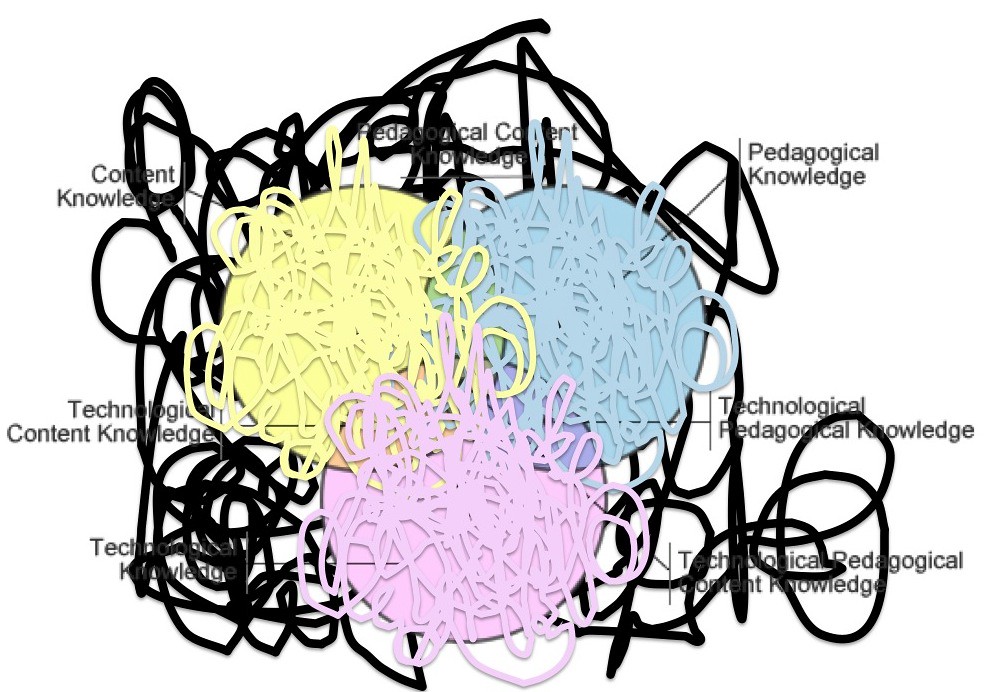
I'm a fan of frameworks and taxonomies. Also known as theories for understanding (Gregor, 2006). It's the understanding part that I like. They provide, or at least good ones do, a leg up in understanding difficult concepts. As Mischra and Koehler (2006, p 1019) say...more...